[KBW2022: 비탈릭 강연] Post Merge: Next Step for Ethereum (full ver. 번역본)
![[KBW2022: 비탈릭 강연] Post Merge: Next Step for Ethereum (full ver. 번역본)](/content/images/size/w1200/2025/08/0_0Wn3EJu246EG9Iji.webp)
 wb3vb
wb3vb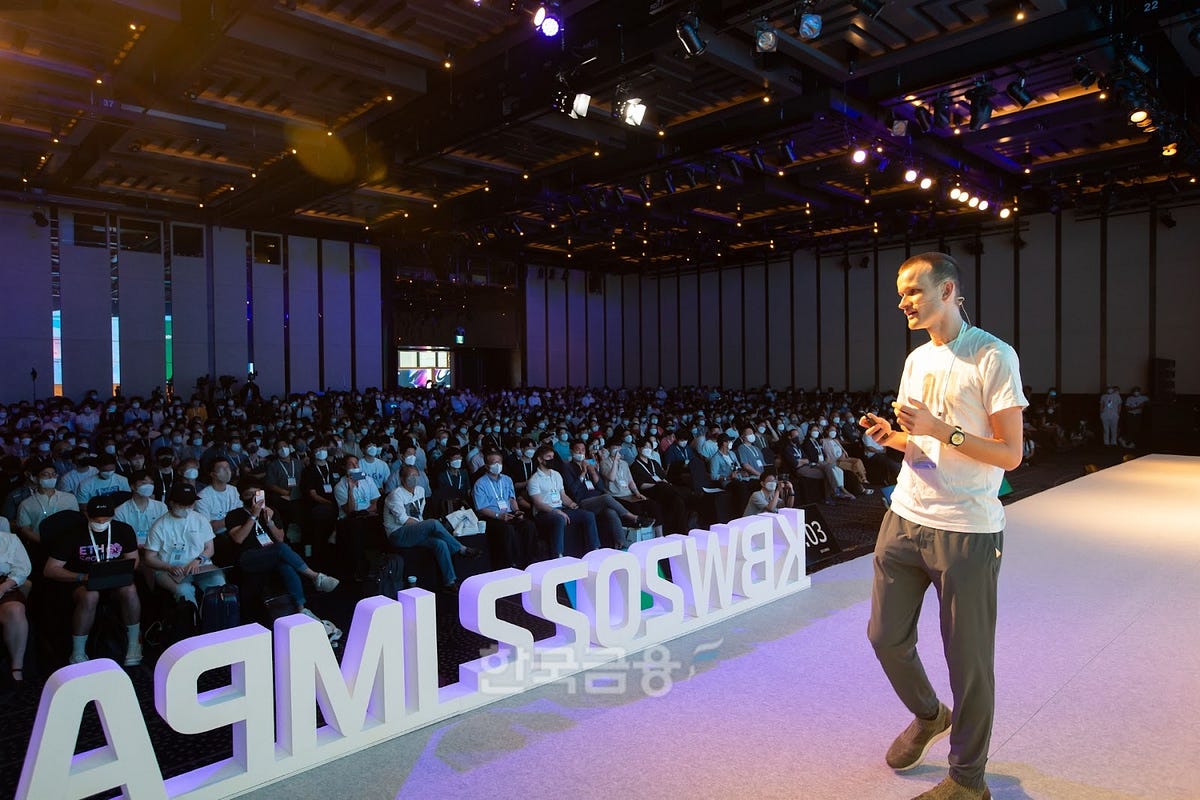
Vitalik Buterin, Chief Scientist at Ethereum Foundation
Translated by @web3vibe
Precautions:
1) 해당 자료는 KBW 2022 현장에서 녹음한 음성파일을 영문으로 직접 ‘타이핑’하고 번역한 자료입니다.
2) 딱딱한 직역이 아닌 문맥상 최대한 이해가 쉽도록 문장을 의역하려 노력했습니다.
3) 초기에 개인 자료 작성용으로 사용하기 위해 만든 번역본이지만 행사에 참여하지 못하신 많은 분이 읽어보셨으면 해서 공유합니다.
4) 전문 번역이 아니기 때문에 의미가 틀린 문장이 있을 가능성이 있으니 참고 부탁드립니다.
Great! Well, so thank you very much for the kindness.
친절하게 맞아주셔서 감사합니다.
So today what we wanted to talk about here as I think a lot of the things that everyone has been excited about Ethereum, so ‘the Merge’, the Proof of Stake(PoS) and some of the things that are going to have an after the Merge.
오늘 말하고자 하는 것은 제 생각에 현재 모두가 열광하고 있는 이더리움의 지분증명(Proof of Stake)과 머지(The Merge), 그리고 머지 이후에 일어날 몇 가지 일들에 관해 이야기하려고 합니다.
But also, talk about this not just for me from a technical perspective but also from the perspective of what these things need you for people and organizations on the Ethereum. and what the Ethereum is for what kind of an impact the Ethereum can have on the world.
기술적인 관점에서뿐만 아니라 사람들과 조직들이 이더리움을 필요로 하는 관점에서도 말하고, 이더리움이 세계에 어떤 영향을 미칠 수 있는지에 관해 이야기해 봅시다.

So the Merge is coming soon and the Merge is the largest upgrade that Ethereum has had probably in this entire history. So this is the final step of Ethereum’s moves state from the Proof of Work(PoW) to Proof of Stake(PoS), but this is a transition that we have been working on almost since the beginning so thinking about PoS started for us, even at the beginning of 2018, even before the first version of Ethereum almost launched, even before the crowd sale started.
곧 머지가 발생할 예정이며 머지는 아마도 전체 이더리움 역사상 가장 큰 업그레이드일 것입니다. 머지는 이더리움이 작업 증명(PoW)에서 지분 증명(PoS)으로 상태를 이동하는 마지막 단계이며, 지분 증명은 저희가 거의 처음부터 작업해 왔던 일입니다. 2018년 초, 그리고 이더리움의 첫 번째 버전이 거의 출시되기 전, 심지어 크라우드 세일이 시작되기도 전에 말이죠.
And since then there’s been a lot of research we’ve gained a lot more of an understanding of what different kinds of PoS protocols are possible and what actually makes the most doesn’t sense to use, what gives the most security and in 2018, the actual deployment of the or the actual development of the current version of Ethereum PoS, the Beacon-chain has started and in December 2020, the Beacon-chain, Ethereum PoS chain launched.
그리고 그 이후로 저희는 리서치를 통해 다양한 종류의 지분 증명 프로토콜 적용 가능성과, 실제 사용할 수 있는지, 그리고 무엇이 가장 높은 보안성은 제공하는지를 알아갔습니다. 그리고 2018년에 현재 버전의 이더리움 지분 증명의 비콘체인(The Beacon Chain)이 실제 개발 및 배포되기 시작되었으며, 2020년 12월 이더리움 지분 증명(Proof of Stake) 체인인 비콘체인이 출시되었습니다.
So the Ethereum PoS chain, which has been running successfully for close to two years now and to this final step that is going to happen very soon, is basically the existing Ethereum’s proof of work chain is finishing, and all of the applications, transactions, smart contracts all of the activities that are on the proof of work Ethereum chain today, moving to live inside of the Ethereum PoS chain from that point forward, right?
그래서 거의 2년 가까이 성공적으로 운영되고 있는 이더리움 비콘체인은 이제 곧 마지막 단계가 진행됩니다. 기존 이더리움의 작업 증명(PoW) 체인은 끝나게 되고 그 위의 모든 애플리케이션, 트랜잭션, 스마트 계약은 그 시점 이후로 이더리움 지분증명(PoS) 체인 내부로 이동합니다.
So after the Merge the Ethereum will be a pure 100% PoS system. So the Merge is a very major step right, but it’s only one of the really big steps that the Ethereum ecosystem is. I’ve been following this rollup focus, this layer-2 focused strategy where there is layer1, Ethereum base layer and then there are layer2 projects. So projects like ‘Optimism’, ‘Arbitrum’, ‘StarkNet’, ‘zkSync’, ‘Polygon Hermes’, ‘Loopring’ which are layer2 scaling solutions that sit on top of layer1. They get their security from Ethereum, layer1, but they have their own features and they have a lot more scalability on top.
따라서 머지 후에 이더리움은 순수 100% 지분증명(Proof of Stake) 시스템이 될 예정입니다. 머지는 매우 중요한 단계이지만 이더리움 생태계가 갖는 정말 큰 단계 중 하나일 뿐입니다. 저는 이더리움 기본 레이어가 있고 이후 레이어2 프로젝트가 있는 레이어2에 집중하는 전략을 따라왔습니다. ‘옵티미즘’, ‘아비트럼’, ‘StarkNet’, ‘zkSync’, ‘폴리곤 헤르메스’, ‘루프링’과 같은 프로젝트는 레이어1 위에 있는 레이어2 스케일링 솔루션입니다. 이 솔루션들은 이더리움 레이어1에서 보안성을 얻지만, 그 위에 더 많은 확장성을 구축하는 자체 기능을 보유하게 됩니다.

So ‘proto-danksharding’ is an improvements to the Ethereum blockchain that you know that everyone will be working on, lots of people are working on it already, but everyone will be working on once the Merge is finished is the goal of it is to expand the amount of data that the Ethereum blockchain to hold. And this is needed to increase the amount of space that our rollups, so the layer2 solutions have to process even more transactions.
‘프로토-댕크샤딩’은 이더리움 블록체인의 개선을 위한 기능으로 이를 위해 모두가 작업하고 있으며, 머지가 완료되는 대로 이더리움 블록체인이 가질 수 있는 데이터의 양을 확장하기 위해 노력할 것입니다. 이는 롤업 가능 공간을 늘려 레이어2 솔루션이 더 많은 트랜잭션을 처리하는 데 필요할 것입니다.
And at the same time rollups are also becoming more delicious. So this was a picture that I published a few days ago basically talking about some of the data compression that rollups are doing. Basically the idea is that the more you can compress data transactions the more of those transactions you can fit into a block that goes into a role. So in a role of computation the data becomes the main thing which is expensive and there’s a lot of work being done to try to reduce the amount of data that transactions need to have.
그리고 동시에 롤업도 더욱 발전하고 있습니다. 이것은 제가 며칠 전에 기본적으로 롤업이 수행하는 ‘데이터 압축’에 대해 이야기한 사진(아래)입니다. 기본적으로 아이디어는 데이터 트랜잭션을 더 많이 압축할수록 블록에 더 많은 트랜잭션을 넣을 수 있다는 것입니다. 주로 ‘계산(computation)’에서 비용이 많이 드는 주요 항목은 ‘데이터(data)’이기 때문에 트랜잭션에 필요한 데이터의 양을 줄이기 위해 많은 작업을 진행 중에 있습니다.

So ‘Optimism’ released zero-byte compression a few months ago, which has improved scalability quite a bit. Actually the more complex the transaction is the more benefits of zero-like compression. So for years, you get compressed about 15% more for complex things, it goes up to 40% or even more and then there’s more and more forms of compression that you can do and which is all being researched. A lot of this is already being worked on.
실제 ‘옵티미즘’은 몇 달 전에 ‘zero-byte compression’을 출시하여 확장성을 상당히 향상시켰습니다. 실제로 트랜잭션이 복잡할수록 ‘zero-byte compression’의 이점이 더 커지게 됩니다. 복잡한 작업의 경우 약 15% 더 압축되고, 최대 40% 또는 그 이상으로 압축됩니다. 또한 다양한 압축 형식은 현재 리서치 중이며 개발중에 있습니다.
So, basically both the Ethereum base layer and rollups are both improving and both with the goal of trying to really massively increase the scalability, increase the number of transactions that can go on-chain as much as possible. So these are the two big focuses, right? So the Merge is there to switch to the proof of stake, and make Ethereum chain more secure, make it more decentralized, and make it much more environmentally friendly. And the Merge will reduce Ethereum’s energy consumption by more than 99.9% and things like proto-danksharding and dansharding and the improvements in roll-up technology that I just talked about will massively increase the scalability.
따라서 기본적으로 이더리움 기본 레이어와 롤업은 모두 확장성을 실제로 크게 늘리려는 목표를 가지고 개선되고 있으며 온체인으로 갈 수 있는 트랜잭션 수를 최대한 늘리려는 목표를 가지고 있습니다. 이것이 현재 집중하고 있는 두 가지입니다. 따라서 머지는 지분 증명으로 전환되며, 이더리움 체인을 더 안전하게 만들고, 더 탈중앙화 되고, 훨씬 더 환경친화적으로 만들게 될 것입니다. 그리고 머지는 이더리움의 에너지 소비를 99.9% 이상 줄일 것이며 방금 말한 것과 같이 프로토-댕크샤딩(proto-danksharding) 및 댕크샤딩(dansharding)과 롤업 기술의 개선은 확장성을 매우 크게 높일 것입니다.
So today, the Ethereum chain is to process about 20 transactions per second, on roll-ups today, you can go up to somewhere between 500 and 1000. If you have all of these scale of data compression upgrades that I talk about this goes up to maybe about 6000 and with a full ‘danksharding’ then, you know, it can go up to maybe 100,000 or even more.
오늘날 이더리움 체인은 초당 약 20개의 트랜잭션을 처리하고 있으며, 오늘날 롤업에서는 500~1,000TPS 사이의 어딘가까지 처리가 가능합니다. 만약, 제가 이야기한 이 모든 규모의 데이터 압축 업그레이드가 진행된다면 약 6,000TPS까지 그리고 완전한 ‘댕크샤딩’이 적용된다면 최대 100,000TPS, 또는 그 이상까지 올라갈 수 있을 것입니다.
So there’s a number of steps that are happening in parallel to lead to large increases in how much Ethereum can scale. So what does this mean for the Ethereum? So the Merge, it reduces energy consumption, it makes Ethereum more secure and it also opens a path to more operations that will happen in the future. And ‘danksharding’, more scalability, which the more scalability means the transactions are going to become cheaper. And so the question we have to ask basically is well, like what can we do with a safer blockchain and much cheaper transactions?
현재 이더리움이 확장할 수 있는 양을 크게 늘리기 위해 여러 단계가 동시에 진행되고 있습니다. 그렇다면 이것이 이더리움에게 의미하는 것은 무엇일까요? 머지은 에너지 소비를 줄이고 이더리움을 더 안전하게 만들며 미래에 더 많은 작업을 수행할 수 있는 길을 열어줍니다. 그리고 댕크샤딩은 더 많은 확장성을 가져오며, 더 많은 확장성은 트랜잭션이 더 저렴해질 것임을 의미한다고 볼 수 있습니다. 그래서 우리가 기본적으로 물어야 하는 질문은 ‘더 안전한 블록체인과 훨씬 더 저렴한 거래 비용으로 무엇을 할 수 있는가?’와 같은 것입니다.
I think one of the very simple and very important things that we can do is make blockchain affordable for everyone. So for the last few years the Ethereum transactions have been pretty expensive, right? and before the transactions also have been expensive like generally what’s any blockchain becomes successful enough if transactions on that blockchain become expensive?
저는 저희가 할 수 있는 매우 간단하면서도 매우 중요한 일 중 하나가 ‘모든 사람이 블록체인을 저렴하게 사용할 수 있도록 하는 것’이라고 생각합니다. 지난 몇 년 동안 이더리움은 거래 비용이 꽤 비쌌습니다. 블록체인상의 거래가 비싸다면 성공할 수 있는 블록체인이 몇이나 될까요?

So just as some numbers for comparison, median income per day in Canada is $113, and in Korea, I think it’s a little bit less, in Poland, it’s $42 a day, in Mongolia $16 a day, in Zambia $4 a day. And now the Ethereum transaction fee in the last few years generally has been somewhere between $1 and $20 for a transaction depending on how complex the transaction is. Are you just sending ETH? Are you sending an ERC20 token? Are you making a trade on Uniswap? Are you creating an NFT? The different kinds of transactions have different costs, but they are pretty expensive. Now, these are numbers that maybe you can afford to pay if you’re in a developing country, but If you’re in Zambia and you have to basically pay like five hours of work worth of income to send a transaction, then this is not really a system that you’ll want to use.
그래서 비교를 위한 몇 가지 수치를 가져왔습니다. 캐나다의 하루 중위소득은 113달러이고 한국은 이것보다 조금 적은 것 같네요. 폴란드는 하루 42달러, 몽골은 16달러, 잠비아는 4달러입니다. 그리고 이제 지난 몇 년 동안 이더리움 거래 수수료는 거래 혼잡도에 따라 일반적으로 $1에서 $20 사이였습니다. 이더리움만 보내는 경우? ERC20 토큰을 보내는 경우? 유니스왑에서 거래하는 경우? NFT를 발행하는 경우? 거래의 종류에 따라 비용은 다르지만, 꽤 비싼 편입니다. 아마 여러분이 개발도상국에 있다고 하더라도 지불할 여유가 있을 정도의 수준입니다. 그러나 만약 여러분이 잠비아에 있고 거래를 보내기 위해 기본적으로 5시간의 일에 해당하는 수입을 지불해야 한다면 이런 시스템을 사용하고 싶을까요?
I remember when I visited Argentina last year in December, there was a huge amount of interest in blockchains and cryptocurrency that I personally saw. Argentina has a big problems with inflation and a lot of people really rely on cryptocurrency in order to save money, have businesses, accept money, and have savings and just be able to do things that with that people needs to do in order to participate in economy without just a losing half of money every year. And, they were all using cryptocurrency but most of them had Binance wallets, right they were using their interacting with Bitcoin and interacting with Ethereum through Binance wallets. Well, zero fees, very fast transfers, a lot of convenience and if the alternative like doing your transaction on-chain costs $4 dollars, then you know, of course people are going to use things in their zero fees, even if they are more centralized.
작년 12월 제가 아르헨티나를 방문했을 때 블록체인과 암호화폐에 대한 관심이 컸던 것으로 기억합니다. 아르헨티나는 인플레이션에 큰 문제가 있으며 많은 사람이 돈을 예금하고, 사업을 하고, 돈을 받고, 저축하는 등 매년 보유만으로 절반의 돈을 잃지 않고 경제에 참여하기 위해 실제 암호화폐에 의존하고 있습니다. 그리고 그들은 모두 암호화폐를 사용하고 있었지만, 대부분은 바이낸스 지갑을 가지고 있었고, 바이낸스 지갑을 통해 비트코인과 이더리움을 사용하고 있었습니다. 무료 수수료, 매우 빠른 송금, 사용의 편리함과 $4 비용이 드는 온체인 거래를 비교한다면 사람들은 중앙화되었다고 하더라도 수수료 무료를 선택할 것입니다.
So I think if we want to create a blockchain space where we can actually have these benefits of not having many centralized institutions for everything, then we have to actually be competitive in terms of costs. We have some of these more centralized alternatives, right. The median transactions on-chain has to be something that actually is affordable for people. So this is what scalability is like here to accomplish. So if the median transaction fee in the last few years is between 1 and 20 dollars and as I mentioned Bitcoin has been very expensive too. Bitcoin transaction fee in 2017 was up to 15 dollars for some time. I think everyone is kind of recognizing that scaling is the only way to go. So like, you know in Bitcoin, for example, there has been a lot of work on the lightning network and to give you Ethereum space, you know, there’s all of this work happening on rollups.
따라서, 중앙화된 기관이 많지 않다는 이점을 실제로 누릴 수 있는 블록체인 공간을 만들고 싶다면 실제로 비용면에서 경쟁력이 있어야 한다고 생각합니다. 우리들은 이러한 중앙 집중식의 대안이 있기 때문에 온체인 거래의 비용은 실제로 사람들이 감당할 수 있는 수준이어야 합니다. 이것이 우리가 높은 확장성을 달성해야 하는 이유입니다. 지난 몇 년 동안 제가 언급했던 것처럼 이더리움 거래 수수료는 1달러에서 20달러 사이였고 비트코인도 매우 비쌌습니다. 2017년 비트코인 거래 수수료는 한동안 최대 15달러였던 것으로 기억합니다. 이제는 모두가 스케일링이 유일한 방법이라는 것을 인식한다고 생각합니다. 예를 들어 비트코인은 라이트닝 네트워크에 대한 많은 작업이 진행되고 있으며, 이더리움은 이러한 작업이 롤업으로부터 진행되고 있습니다.
So today with rollups transaction fees can be in general sometimes 25 cents sometimes 10 cents and in the future with rollups with all of the improvements ‘efficiency’ that I talk about the transaction costs could go down to 5 cents or even maybe nearly as low as 0.2 cents. So much cheaper, much more affordable as it could be a game changer.
오늘날 롤업 거래 수수료는 일반적으로 때로는 25센트, 때로는 10센트이며, 미래에는 제가 말한 ‘효율성’이 모두 개선된 롤업은 5센트 또는 거의 0.2센트까지 거래 비용을 내릴 수 있다고 전망됩니다. 이는 훨씬 더 저렴하게 사용할 수 있는 게임체인저가 될 수 있습니다. (*프레젠테이션에서는 0.002센트까지 내릴 수 있다고 표기되었습니다.)
Now what else might we do? The payments were like the original use case of cryptocurrency. So Bitcoin describes the ‘Electronic Cash’. It wasn’t supposed to be about buying it and holding that and hoping the value goes up. It wasn’t even supposed to be digital gold. It’s like, you know, the primary use cases like money and use it to pay people. But that’s something that’s hard to do when you know, transaction fees are very high.
이제 우리는 무엇을 더 할 수 있을까요? ‘결제(payments)’는 암호화폐의 기본 사용사례입니다. 그래서 비트코인은 ‘전자현금’을 묘사했습니다. 그저 비트코인은 사고 보유하여 가치가 오르기를 바랬던 것이 아니며, ‘디지털 골드’도 아니었습니다. 돈과 같이 사람들에게 지불하는 것이 주요 사용 사례가 되겠지만, 거래 수수료가 매우 높다는 사실을 알게 된다면 어려운 일입니다.

I remember back in 2013~2014. I get through a lot of years of movements really trying to get like Bitcoin as a payment system with us. So this picture is from a bar in Berlin called a ‘Group Seventy-Seven’. It’s in this area that they called the Bitcoin flees. There were basically something like 10 restaurants opposing each other and they tried very hard to convince all of them to accept Bitcoin and to convince a lot of like Bitcoin people to move there and to really try to kind of create some community within which, you know, Bitcoin payments could happen. And this was only one example right through a lot of different examples of this.
저는 2013~2014년쯤으로 기억하는데, 저는 비트코인이 지불 시스템이 되기 위한 수년간의 많은 ‘운동(movement)’들을 겪었습니다. 이 사진은 베를린의 ‘그룹 세븐티세븐’이라는 술집에서 가져온 것입니다. 그 지역은 약 10개 정도의 레스토랑이 서로 마주하고 있었습니다. 그들은 모두가 비트코인을 받아들이고, 많은 비트코인 사용자들이 그곳으로 이사하도록 설득하였고 커뮤니티를 만들어 비트코인 결제가 발생할 수 있도록 큰 노력을 했습니다. 그리고 이것은 많은 다른 예 중 하나일 뿐입니다.
But, cryptocurrency payments sort of became less popular after that. And I think it’s pretty clear that these are one of the reasons why, basically because if those who remember 2013, one of the big arguments that people use in favor of crypto payments is that they are much cheaper. PayPal charges 29 cents plus 2.9% and if it is International payment they charge even more and you know the blockchain is very cheap. This was true until 2013. It stops being true in 2018. So once the arguments that ‘the blockchains are cheaper’ stopped being true and started being more expensive. It just becomes hard for people to believe this.
그러나, 암호화폐 지불은 그 이후로 인기가 식었습니다. 그리고 저는 이것이 기본적으로 2013년을 기억한다면 암호화폐 지불 찬성에 사용되는 주장 중 하나가 “훨씬 저렴하기 때문”이라는 이유였다고 분명히 생각합니다. 페이팔은 29센트에 2.9%를 추가로 청구하며, 국제 결제인 경우 더 큰 비용을 청구하기 때문에 블록체인이 매우 저렴하다는 것을 알 수 있습니다. 하지만, 이것은 2013년까지만 사실이었고, 2018년부터는 더 이상 사실이 아닌 게 되었습니다. 그래서 일단 “블록체인이 더 저렴하다”는 주장은 사실이 아닌 것이 되고 거래가 더 비싸지기 시작하였으며, 사람들은 블록체인 저렴하다는 것이 점점 더 믿기 어려워졌습니다.
But now once we have scaling technology and once the scaling technology is like a very strong area robust, it actually becomes possible. So it really tries to make crypto payments for the industry again. Now, I think there are some places where crypto payments make more sense than other places. So lower income countries, places where the existing financial system is not very effective, the problem with inflation is that it is not well connected to developing countries. There’s a lot of opportunities for crypto payments to be very valuable. The International businesses, a lot of people quitely use cryptocurrency for international payments already.
그러나 이제 스케일링 기술이 매우 강력한 영역으로서 견고해진다면, 실현 가능하게 될 것이며 암호화폐 결제는 다시금 한 개의 산업으로써 자리를 잡게 될 것입니다. 저는 암호화폐 결제가 더욱더 유용하게 사용될 수 있는 사용처가 있다고 생각됩니다. 저소득 국가의 기존 금융 시스템이 그다지 효과적이지 않으며 인플레이션 문제는 개발 도상국과 잘 연결되지 않습니다. 암호화폐 결제가 가치를 지닐 수 있는 기회는 매우 많습니다. 국제 비즈니스들은 이미 결제에 암호화폐를 상당히 많이 사용하고 있습니다.
So just payments like small hands across the internet and just you know, some kind of educational cash when basically just the ability to have some way to pay people that both has the benefits of being in digital technology, has the efficiency benefits and safety benefits, but at the same time it does not rely on like some corporation to be in the middle as a centralized intermediate.
인터넷(암호화폐)을 통한 일종의 교육비와 같은 적은 비용 지불들은 여러분도 알다시피 기본적으로 효율성과 안정성의 이라는 디지털 기술의 이점이 있으며 동시에 일부 중앙 집중 기업에 의존하지 않습니다.
Okay. So these are all things that I think people have been talking about almost since the beginning and it’s a vision that has been I think forgotten a little bit and I think one of the reasons why it has been forgotten is basically because the transaction fees got risen, but once blockchain scalability is here. I think it actually makes sense to really start thinking about a lot of these ideas again now that we actually have the tools to be able to do this scale.
사실 이것들은 모든 사람이 처음부터 이야기해 왔던 것입니다. 그리고 제가 조금 잊어버린 비전인 것 같기도 하네요. 그렇게 된 이유 중 하나는 기본적으로 거래 수수료가 인상 높아졌기 때문입니다. 하지만 이제 블록체인 확장성이 있습니다. 우리는 실제로 실현할 수 있는 도구를 가지고 있고, 이러한 많은 아이디어에 대해 다시 생각해볼 수 있는 적합한 시점이라고 생각됩니다.
Non-financial applications, right? So, I think crypto-payment is very valuable. It’s very important that there are a lot of people for whom we can make their lives much easier. But, financial applications are not the only kinds of blockchain applications that matter. Right, and I have been talking about this for a long time. So for anyone who has read a Ethereum whitepaper, you might remember that there was I had a long list of applications there I talked about decentralized domain names, decentralized monumental system, and decentralized insurance, and like some decentralized file storage like all of these different applications that are not just about moving money around
비금융 애플리케이션에 관해 이야기해봅시다. 저는 ‘암호화폐 결제’가 매우 가치가 있다고 생각합니다. 우리가 많은 이들의 삶을 훨씬 더 쉽게 만들 수 있다는 것은 매우 중요합니다. 하지만, 금융 애플리케이션이 블록체인이 가질 수 있는 유일한 애플리케이션은 아닙니다. 저는 이것에 대해 오랫동안 이야기해왔습니다. 이더리움 백서를 읽은 사람이라면 제가 단순히 돈을 옮기는 것이 목적이 아닌 분산 도메인, 분산 기념비 시스템 및 분산 보험에 관해 이야기한 긴 애플리케이션 목록이 있다는 것을 기억할 것입니다.
And the ENS is probably the most successful and not financial application today. So who’s here has an ENS account? Who here has used an Ethereum application that is not financial, that’s not ENS? Okay, I see proof of humanity, proof of attendance protocol signing with Ethereum and a few others, right? So they exist but I think it’s obvious to people that ENS is much more popular than all the rest of them and it should be obvious why the ENS provides a lot of value to people. Basically ENS once you have, you know a name and it lets people interact with you on-chain or even off-chain by just using your name instead of having to ask you for this complicated forty letter address that is very easy to misplace or having to put the wrong one and whatever. So, ENS is very useful if you want to pay people using ETH or any Ethereum assets, it is also useful for a kind of off-chain applications as well.
그리고 아마도 ENS는 오늘날 가장 성공적인 비금융 애플리케이션일 것입니다. 여기 ENS 계정을 가지고 계신 분이 있으신가요? 그렇다면, 여기 ENS, 혹은 금융과 관련되지 않은 이더리움 애플리케이션을 사용해 본 적이 있는 분이 계시나요? 이더리움으로 사인하는 “Proof of Humanity(PoH)”,”Proof of Attendance(PoA)” 프로토콜과 그 외 더 있습니다. 제 생각에는 ENS가 사람들에게 가장 큰 가치를 제공하는 게 분명하군요. 기본적으로 ENS가 있다면 이름을 통해 복잡한 40자 이더리움 주소를 요구할 필요 없이 이름만 사용하여 사람들이 온체인 또는 오프체인에서 상호 작용할 수 있도록 할 수 있습니다. 따라서 ENS는 이더리움 또는 이더리움 자산을 사용하여 사람들에게 지불하려는 경우 매우 유용하며, 또한 오프체인 애플리케이션에도 유용합니다.
So accounts management. So there was this project called ‘Sign-in with Ethereum Now’ that lets you use your Ethereum accounts to sign into web2 services. So basically instead of having a signing in with Facebook or signing with Google you could sign-in with your Ethereum. With Ethereum basically once you have this kind of account that actually is under your control. It’s not dependent on some intermediary to operate it, but you can use it to interact with existing web services. And this, you know, the nice thing about doing this on Ethereum is especially with some of the work that’s been happening on smart contract wallets is that your wallet to be like your account can be a lot smarter than before.
‘어카운트 관리’에 대해 이야기해봅시다. 이더리움 계정을 사용하여 웹2 서비스에 로그인할 수 있는 ‘Sign-in with Ethereum Now’’이라는 프로젝트가 있습니다. 기본적으로 ‘페이스북’을 통해 로그인하거나 ‘구글’ 계정으로 로그인하는 대신 ‘이더리움’으로 웹2 로그인할 수 있도록 합니다. 이더리움을 사용하여 로그인한 계정은 자신이 제어할 수 있습니다. 운영하는 중개자에게 의존하지 않으며 기존 웹 서비스와 상호 작용하는 데 사용할 수 있습니다. 그리고 이더리움을 지갑 내 스마트 컨트랙트 작업을 통해 지갑이 계정처럼 사용될 수 있기 때문에 계정이 이전보다 훨씬 더 똑똑해질 수 있다는 것입니다.
So one of the ideas that I talked about is ‘Social Recovery’. If your keys get hacked or you lose your keys, you would be able to specify some group of people that are able to reset your keys and change your key to something else. So instead of like that backup recovery function being done by some centralized company like that would have the ability to basically control your accounts for whatever it wants. That function would be under the control of some group of people that you just trust.
제가 이야기하고 싶은 아이디어 중 하나는 ‘소셜 리커버리’입니다. 지갑 개인키가 해킹당하거나 키를 분실한 경우 키를 재설정하고 변경할 수 있는 그룹에 포함될 사람들을 지정할 수 있습니다. 따라서 중앙화된 회사에서 진행하는 백업 및 복구 기능 대신 기본적으로 자신이 원하는 대로 계정을 제어할 수 있습니다. 해당 기능은 당신이 신뢰하는 지정된 사람들의 통제 속에 있게 될 것입니다.
So, these applications are all combined together. Because if you have an Ethereum account and you want to use that account to sign into different services, you want to have a username now. How do you have a username in a decentralized world? Well, you have ENS. How do you convince people that your account is a human or that your account is not like just one of 100,000 bots that are controlled by the same program? Well, this is what an on-chain attestation is for. So I’ve talked about ‘Soulbound Token’ recently and there’s already some of these on-chain projects things like ‘Proof of Humanity’ even just very simple things like checking whether or not you sent transaction before so things like this can make it more difficult for someone to just create 100,000 fake accounts in spare, right?
이러한 애플리케이션들은 모두 함께 결합됩니다. 이더리움 계정이 있고 해당 계정을 사용하여 다른 서비스에 로그인하려는 경우 사용자 이름이 필요하기 때문입니다. 탈중앙화 세상에서 어떻게 사용자 이름을 보유할까요? ENS가 있습니다. 자신의 계정이 사람이며 동일한 프로그램에 의해 제어되는 100,000개의 봇(프로그램) 중 하나가 아니라는 것을 사람들에게 어떻게 설득할 수 있을까요? 바로 이것이 ‘온체인 증명’의 목적입니다. 그래서 저는 최근에 ‘소울바운드 토큰’에 대해 이야기했고 이미 ‘Proof of Humanity’와 같은 온체인 프로젝트가 있습니다. 심지어 이전 트랜잭션 내역을 확인하는 것과 같이 아주 간단한 것도 확인이 가능해 누군가 100,000개의 가짜 계정을 여분으로 만드려는 노력을 매우 어렵게 만들 것입니다.
So these applications, you know, they’re all part of this network effect, they all talk to each other. And this is basically creating and already starting to grow. Now in order for this to be possible, it has to not be prospectively expensive, right? You need to actually send a transaction to create a ‘state’. You need to actually send a transaction because you need to recover your account. You need to eventually send each transaction to meet some of these attestations. If those operations cost like 11 dollars, then people are not going to do it. If doing any of those things cost something like 11 cents, then a lot of people will do it. if it costs 0.11 cents then even more people will do it.
따라서 이러한 응용 프로그램들은 모두 이 ‘네트워크 효과’의 일부이며 모두 상호 작용합니다. 그리고 이것은 기본적으로 만들어지고 있고 이미 성장하기 시작했습니다. 이것이 가능하게 하려면 예상되는 비용이 저렴해야 합니다. ‘상태’를 생성하려면 실제로 트랜잭션을 보내야 합니다. 계정을 복구하려고 하더라도 실제 트랜잭션을 보내야 합니다. 이러한 증명 중 일부를 충족하려면 결국 각 트랜잭션을 보내야 합니다. 이러한 작업을 진행하는데 만약 11달러가 든다면 사람들은 그렇게 하지 않을 것입니다. 그러나, 11센트가 든다면 많은 사람이 그렇게 할 것이고 만약 비용이 0.11센트라면 더욱더 많은 사람이 할 것입니다.
So this scalability isn’t just like some boring thing where you know, just make cross numbers go down scalability. I think it actually enables and unblocks entire review classes of applications, things that we have been thinking about theoretically for a long time, but things that just have not actually been possible yet, but will be possible. Micro-scale DAOs, so I think DAOs continue to be a fascinating crypto application. Like basically, it is just a very simple and easy to display for a group of people to come together. So for a lot of reasons it is easier to work with companies and in a lot of cases that I think there’s a lot of smaller use cases. But here too, sending transactions needs to actually be affordable.
따라서 ‘확장성’은 그저 비용을 낮출 수 있는 여러분이 알고 있는 그런 지루한 개념이 아닙니다. 저는 확장성이 실제 모두가 오랫동안 이론적으로 생각해 왔지만 실제로는 아직 가능하지 않았던 일을 가능하게 할 것이라고 생각됩니다. 마이크로-스케일 DAO, 저는 DAO가 지속해서 매력적인 크립토 애플리케이션이 될 것이라고 생각합니다. 기본적으로 여러 사람이 함께 모이도록 하는 것을 매우 간단하고 쉽게 합니다. 여러 가지 이유로 회사와 협력하는 것이 쉽지만, 더 쉽고 많은 소규모 사용 사례가 존재한다고 생각합니다. 그러나 여기에서도 거래를 보내는 것은 실제 저렴해야 합니다.

Enterprise blockchain use cases. So I think that there have been a lot of enterprises and a lot of institutions, sometimes government institutions, a lot of companies in many industries that have been asking like, how can we use this technology? How can we use some of the ‘trustlessness’ benefits like this technology. And again, you know, I think about five years ago everyone was doing ‘permission blockchains’, right? Basically, you know, we don’t like public Ethereum. It’s too public. It’s not scalable enough. So we’re going to create our own chains and we’re going to have 25 nodes and we’re going to choose who the 25 nodes are and we’re going to have this kind of permission network between ourselves.
기업의 블록체인 사용 사례에 관해 이야기해봅시다. 많은 기업과 많은 기관, 때로는 정부 기관, 많은 산업 분야의 많은 회사에서 이 기술을 어떻게 사용할 수 있는지 묻고 있습니다. 이 기술이 가진 ‘신뢰(trustlessness)’라는 이점을 어떻게 사용할 수 있을까요? 5년 전만 해도 모두가 ‘허가형 블록체인’을 만들고 있었습니다. 기본적으로 그들은 ‘우리는 공개적인 이더리움 체인을 좋아하지 않는다’, ‘너무 공개적이다’, ‘충분한 확장성이 가능하지 않다’, 그래서 ‘우리는 우리만의 허가형 네트워크 체인을 만들 것이고 25개의 노드를 갖게 될 것이며 우리는 25개의 노드가 누구인지 선택할 것이다’ 라고 했습니다.
Now as far as I can tell, there hasn’t really been anything in that category that has succeeded. Almost all the projects that I know about either gave up and became public chain projects or they gave up and became regular centralized projects. But I do think that the idea of trying to create a good compromise between a centralization and decentralization for some use cases is important but I think that there are different ways to make those compromises.
지금 제가 말할 수 있는 한, 해당 범주에서 성공한 것은 실제로 없었습니다. 제가 아는 거의 모든 프로젝트는 포기하고 퍼블릭 블록체인 프로젝트가 되거나, 일반 중앙 집중식 프로젝트가 되었습니다. 일부 사용 사례의 경우 중앙화와 분산화 사이에서 좋은 절충안을 만들려는 아이디어는 중요하다고 생각하지만, 절충안을 만드는 다른 방법들이 있다고 생각합니다.
So with a lot of the progress that has happened with the zero knowledge proofs, zK-STARK in the last few years, there’s this interesting concept called the ‘Validium’. The basically the idea here is that you have a centralized server you continue to have centralized server do what the server is doing before, except you commit like publish hashes on-chain, and those hashes come with cryptographic groups that prove that the data that goes into that hash actually deals the result of like some operations that follow the rules.
지난 몇 년 동안 영지식 증명, zK-STARK에서 일어난 많은 발전과 함께 ‘밸리디움(Validium)’이라는 흥미로운 개념이 만들어졌습니다. 기본적인 아이디어는 기존의 중앙화 된 서버가 있고 중앙화 서버가 이전에 서버가 하던 일을 계속 수행하도록 합니다. 단, 해시를 온체인에 게시하는 것과 같이 ‘커밋’을 하고 해당 해시에는 암호화 그룹이 함께 제공되어 데이터가 해시로 이동한다는 것을 증명합니다. 이는 해당 해시에 실제로 규칙을 따르는 일부 작업의 결과를 처리합니다.
So one potential use case even within the crypto space. Let’s say you have a cryptocurrency exchange and let’s say you want to convince your users that you are not a fractional reserve. You want to convince your users that you’re honest. You actually have all of the money that your users deposited. How do you do this? Well, one way that you can do this is with zero-knowledge proofs is you would run as a ‘Validium’ and you regularly publish these hashes on-chain and what the hashes do is the all of the proof that the amount of money in the system actually equal or amount of money that you have actually equals the amount of money in users’ balances. So like the sum of the balances that ETH change shows to its users actually equals the amount of money that the exchange has.
크립토 공간 내에서도 하나의 잠재적 사용 사례가 될 수 있습니다. 암호화폐 거래소가 사용자에게 거래소 자산이 ‘부분 지급준비금’으로 활용되는 것이 아니라는 것을 확신시키고 싶다고 가정해 봅시다. 실제 거래소는 사용자가 예치한 모든 금액을 정직하게 가지고 있다는 것에 대한 확신을 주고 싶다면 어떻게 해야 할까요? 이것을 가능하게 할 수 있는 한 가지 방법은 영지식 증명을 사용하는 것입니다. ‘밸리디움’으로 실행하고 이러한 해시를 정기적으로 온체인에 게시하며 해시가 하는 일은 예치금에 대한 모든 증거가 됩니다. 시스템이 실제로 가지고 있는 예치금이 사용자의 잔액에 있는 금액과 같다는 것을 말해주며 사용자에게 표시되는 잔액의 합은 실제로 거래소가 보유한 금액과 같다는 것을 증명할 수 있습니다.
And you can even go further, you can even put users’ balances into the smart contract and so it’s not even possible for them to take money out unless the users authorize it. So you can do these kinds of things so you can really reduce the opportunity for fraud to happen for like fractional reserves and you know all of these bad things to happen. But at the same time it’s still a server. It’s still a one computer. You don’t have to figure out a consensus network. It’s just that kind of an overlay on top of existing technology that is very easy to deploy.
그리고 더 나아가 사용자의 잔액을 스마트 컨트랙트에 넣을 수도 있으며 사용자가 승인하지 않는 한 자금을 인출하는 것도 불가능하게 할 수 있습니다. 따라서 이러한 종류의 일을 할 수 있고, ‘부분 지급준비금’에 사기가 발생할 가능성을 줄이고 이러한 일이 모두 발생한다는 것을 온체인을 통해 알 수 있습니다. ‘밸리디움’은 하나의 컴퓨터와 서버에서 운영할 수 있습니다. 또한 합의 네트워크(consensus network)를 찾을 필요가 없으며 기존 기술 위에 있어 배포하기가 매우 쉽습니다.
And these are things that can be done already. So I think the work that’s happening on scalability is going to make this even cheaper. So cheap transactions will make it even easier to run one of these networks that kind of where activity happens on a server but it gets published on-chain and I also think that It’s the work that’s being done to scale blockchain can also be applied to make the systems more scalable and more efficient internally.
위 내용들은 이미 할 수 있는 것들입니다. 그래서 저는 확장성에 대한 작업이 이를 훨씬 더 저렴하게 만들 것으로 생각합니다. 저렴한 거래는 이러한 네트워크 중 하나를 훨씬 더 쉽게 실행할 수 있도록 하며 서버에서 활동이 발생하지만, 온체인에 게시되도록 할 것입니다. 또한, 저는 블록체인 확장을 위해 수행 중인 작업이 시스템을 내부적으로 더 확장하고 효율적으로 만들기 위해 적용될 수 있다고 생각합니다.
So the zero knowledge proof space. I think only deals now are as powerful as they are because so much work has been done. So many tests are put into it with the goal of improving blockchain and I think a lot of that work is going to come back out is going to improve people’s ability to use this technology even outside of a blockchain in context.
영지식 증명에 관해 이야기 봅시다. 많은 작업이 완료되었으며 매우 강력하다고 생각합니다. 블록체인 개선을 목표로 많은 테스트가 이루어지고 있으며 많은 작업이 블록체인 외부에서도 상황에 따라 이 기술을 사용하는 사람들의 능력을 향상하리라 생각합니다.

So some future questions. These are just some examples of what I think is going to come out of and of blockchain ecosystem where blockchains are very much safer where we have much more scalability, you know, I think much cheaper transactions, we’ll make blockchains both cryptocurrency and non financial applications much more accessible to everyone much more accessible, especially to people in developing countries, and it’s going to finally unlock a lot of the applications that people have been wanting to do in the long time.
몇 가지 미래 지향적인 질문에 대해 알아봅시다. 제가 생각하는 몇가지 예시들은 더 높은 확장성과 더 안전한 블록체인 생태계에서 나올 것입니다. 아시다시피, 훨씬 더 저렴한 거래 비용은 블록체인을 모든 사람, 특히 개발도상국의 사람들이, 암호화폐와 비금융 애플리케이션에 훨씬 더 쉽게 접근할 수 있으며 마침내 사람들이 오랫동안 하고 싶어 했던 수많은 애플리케이션의 봉인을 해제할 것입니다.
Now there are other improvements that are coming now. So maybe we can improve Ethereum over time to provide faster confirmation instead of confirming the transaction in like one minute or even 30 seconds. What if we could confirm the transactions in 3 seconds? What would that do? The improvements to privacy are happening inside of a lot of base layer1 protocols. What could we do with more improvements in privacy?
또한, 곧 진행될 다른 개선사항들이 있습니다. 이더리움을 더욱 개선하여 트랜잭션을 ‘컨펌’하는데 1분, 혹은 30초가 아닌 더 빠른 ‘컨펌’을 제공할 수 있습니다. 3초 안에 트랜잭션을 ‘컨펌’할 수 있다면 어떤 일이 일어날까요? 또한 ‘프라이버시’에 대한 개선은 많은 기본 레이어1 프로토콜 내부에서 일어나고 있습니다. ‘프라이버시’를 더 많이 개선하면 무엇을 할 수 있을까요?
There’s some people that I know that are already doing blockchain based privacy preserving voting protocols that preserve privacy and preserve security at the same time. So what can we do if we just have very efficient, you know digital voting systems that are also secure.
이미 개인 정보를 보호하고 동시에 보안을 유지하는 블록체인 기반인 ‘개인정보보호 투표 프로토콜’을 개발하고 있는 사람들이 있습니다. 따라서 효율적이며 안전한 디지털 투표 시스템이 있으면 무엇을 할 수 있을까요?
What will we get from better ‘middleware’ applications? So a lot of applications that exist now on Ethereum are applications that other applications can benefit from. So, ‘Proof of Humanity’ is a big one. So basically sign out to the DAO and the DAO verifies your submission and if it accepts their submission, it gives you a token that proves that you are a big human. So this is an application that a lot of other applications can plug into anti-use. Like if you want to create some new token and you want to distribute the supply equitably, then PoH is a good way to do that.
더 나은 ‘미들웨어’ 애플리케이션에서 무엇을 얻을 수 있을까요? 현재 이더리움에 존재하는 많은 애플리케이션은 다른 애플리케이션이 혜택을 볼 수 있도록 합니다. ‘Proof of Humanity’가 아마 좋은 예시겠네요. 기본적으로 다오(DAO)에 증명을 제출하고, 다오가 당신의 제출을 확인하고, 제출을 수락하면 당신이 인간임을 증명하는 토큰을 제공합니다. 이것은 많은 다른 애플리케이션이 연결할 수 있는 애플리케이션이 될 수 있습니다. 새로운 토큰을 만들고 공급을 공평하게 분배하고 싶다면 ‘Proof of Humanity’는 좋은 방법이 될 것입니다.
On-chain arbitration. So there’s a lot of projects that are trying to do this. So on-chain oracles try to provide information in a secure, decentralized way. So what happens when we have better applications that where those applications are not just there for users, but they’re also there for other applications. This is I think also an interesting question to ask, like what will become possible as a result of these kinds of things. And I think the answer is we don’t know yet. But, you know that at the same time we can start thinking now and we can I think start building now and maybe you know within two or three years, we’re actually going to see the answers to some of these questions.
‘온체인 아비트레이션(중재)’, 이것을 시도하는 많은 프로젝트가 있습니다. 온체인 오라클은 안전하고 분산된 방식으로 정보를 제공하려고 노력하고 있습니다. 따라서 이러한 애플리케이션이 사용자만을 위한 것뿐만 아니라 다른 애플리케이션을 위해 존재한다면 어떤 일들이 생길까요? 그 대답은 우리가 아직 모릅니다. 하지만 동시에 우리들은 지금 생각을 시작할 수 있고, 구축을 시작할 수 있습니다. 그렇게 된다면 아마도 2~3년 안에 우리가 실제로 이러한 질문에 대한 답을 보게 될 수 있지 않을까요?
감사합니다.
![[MEV Series]#3: Censorship Resistance Solutions & Builder Centralization](/content/images/size/w960/2025/08/1_x-GNlHG0VZRLicOhR5mJ_g.webp)

